

Drifter Merch’s blog features news, events, tour dates and vendor spotlights to music and album reviews.
The Wall of Sound: How the Grateful Dead Hauled 75 Tons of Audio Perfection Around in 1974
Imagine standing in front of a three-story wall of speakers, surrounded by thousands of Deadheads, hearing Jerry Garcia and the Grateful Dead in a way no concert audience had ever experienced before. In 1974, the Grateful Dead did something almost unthinkable when they took a 75-ton sound system on tour. Known as the Wall of Sound, this massive engineering experiment wasn't simply about being louder. It was about changing the live music experience, delivering incredible clarity across an entire concert field, and pushing the boundaries of what a touring band could do.
It was ambitious, expensive, complicated, and completely legendary. More than 50 years later, the Wall of Sound remains one of the most fascinating chapters in Grateful Dead history. Here's how the band built it, hauled it, and brought it to life.
A wall built for the whole field
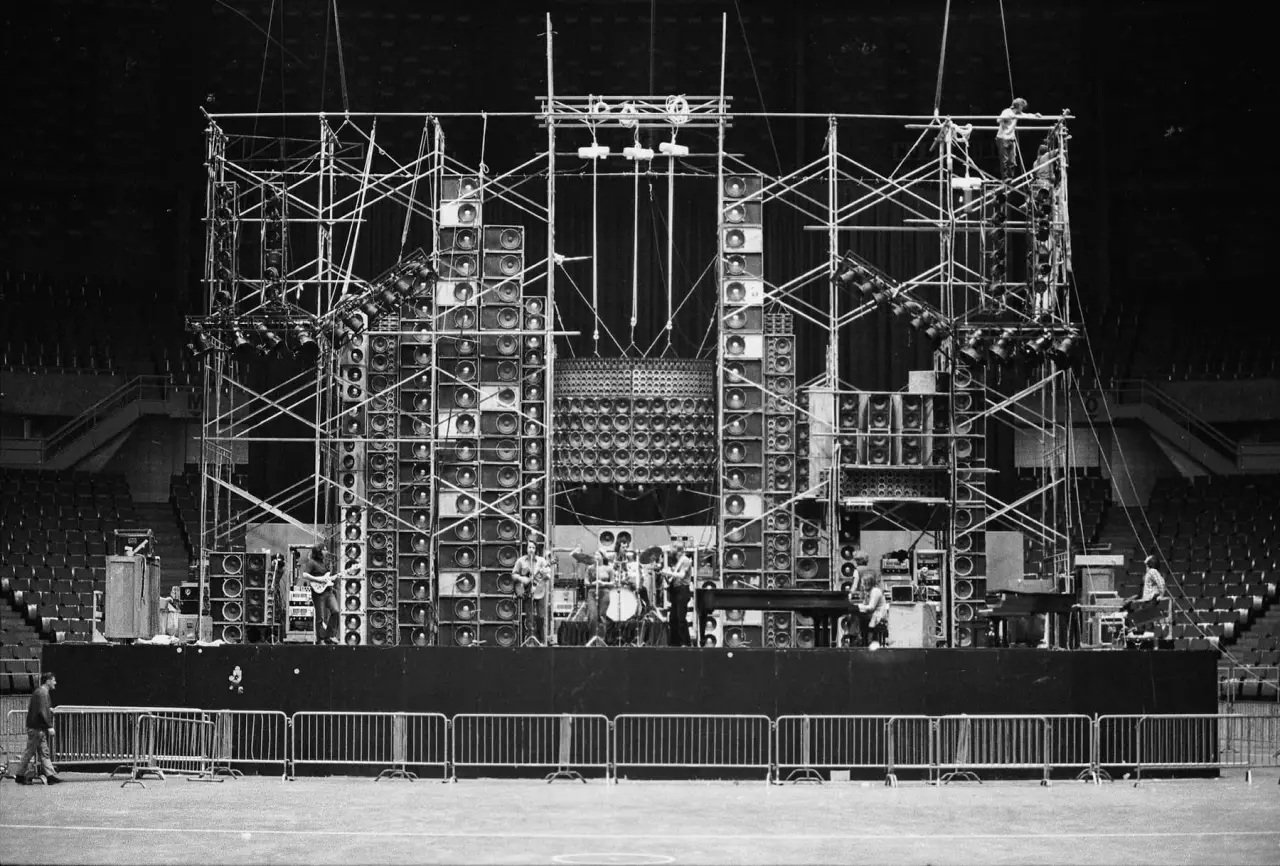
Photo courtesy: RELIX
The Wall wasn’t just about making a concert louder. The band wanted the music to reach the crowd with remarkable clarity and consistency, so people across the field could share a more even listening experience.
The system made its debut at the Cow Palace on March 23, 1974, at a show billed “The Sound Test.” At its peak, the towering setup stood more than three stories high and used around 600 speakers. “Same volume” captures the Wall’s big idea, to make the sound feel more even across the field, rather than blasting the folks up front and leaving everyone else straining to hear. It wasn’t literally identical decibels at every spot. But the goal was bold, generous, and very Dead in order to make the show feel like it belonged to everybody.
The sound crew deserves a standing ovation
A mountain of speakers doesn’t set itself up. The Wall depended on a crew of engineers and roadies who hauled, assembled, tuned, and managed the system from stop to stop. It was a massive undertaking, and the people behind the boards were every bit as essential to the experience as the musicians onstage. So next time the mix sounds sweet from the back of the lawn, raise a grateful thought to the people making it happen.
A legendary sound, with a legendary footprint
The Wall traveled with the Dead through 1974, including the band’s October farewell shows at Winterland. But that kind of scale came with a price: hauling and setting up the system was expensive and demanding. The Dead eventually retired the Wall, but its story kept rolling, through fan memories, old recordings, and the continuing fascination with what a band can build when it follows a big idea all the way. Know your history, wear the history
The Wall of Sound was more than an impressive piece of concert history. It represented the Grateful Dead's willingness to push boundaries, experiment, and create something fans had never experienced before. That same spirit is what keeps the music, the memories, and the community alive today. Because being a Deadhead isn't just about the shows you've seen. It's about the music, the people, and being part of something that never really ends.